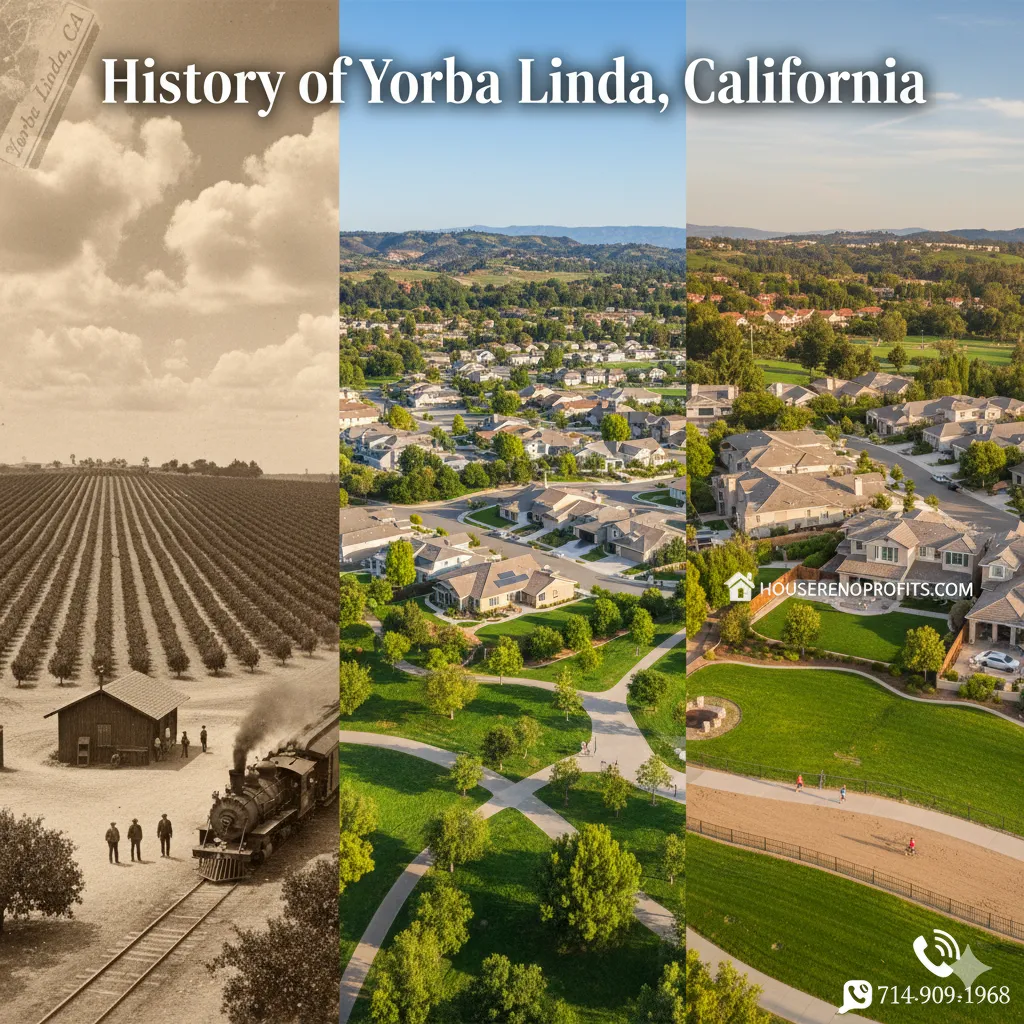
History of yorba linda California
The history of Yorba Linda, California, is a remarkable narrative of transformation, tracing a path from ancient indigenous settlements to a modern, affluent residential community. It is a story intrinsically tied to the land, the pursuit of water, and the vision of its founders.
This particular corner of Orange County has witnessed shifts in dominion, economy, and culture over centuries, yet it retains a distinct and recognizable character. The enduring spirit of self-reliance has consistently shaped the community’s destiny.
Often dubbed the "Land of Gracious Living," Yorba Linda’s roots are deep, beginning long before the introduction of citrus groves or the building of its luxurious suburban tracts. It stands as a testament to the power of planned growth and preservation.
Tracing this historical thread is essential for understanding the foundations of the current real estate values and community pride within yorba linda California. The quality of life today is a direct result of past decisions.
The Ancient Landscape and the Tongva People
Before any European contact, the lush canyons and rolling hills that define the Yorba Linda area were the ancestral home of the Tongva people, also known as the Kizh or Gabrieliño. Their presence in the area dates back millennia.
They utilized the rich ecosystem along the Santa Ana River and its tributaries, establishing seasonal camps and more permanent villages. Their culture was based on hunting, gathering, and the sustainable management of local resources.
The topography of yorba linda California, with its protective foothills, offered shelter and a reliable source of water, making it a critical part of the Tongva’s territorial map. Their understanding of the land was profound and detailed.
Evidence of their ancient lifeways, including tool fragments and remnants of settlements, has been discovered throughout the region, particularly in the lower elevations closer to the riverbed. They are the first chapter of this history.
The Spanish arrival in the late 18th century brought catastrophic change, introducing missions, European diseases, and the forced conversion of the indigenous populations. This marked the tragic end of their autonomous existence.
The Vastness of the Rancho Era
The post-mission period led to the establishment of enormous land grants, or ranchos, under both Spanish and later, Mexican rule. The vast majority of Yorba Linda’s future territory fell under one such grant.
This system of land tenure established the initial economic structure of the region, emphasizing expansive cattle ranching over small-scale farming. It created a powerful, landed aristocracy that ruled for decades.
José Antonio Yorba and the Rancho Santiago de Santa Ana
The foundational legal claim to the land was the Rancho Santiago de Santa Ana, one of the largest and most valuable grants in all of Alta California. It was bestowed upon the soldier José Antonio Yorba in 1810.
Yorba was a veteran of the military expeditions that secured Spanish control over the region. His reward was a staggering 62,500 acres of prime land, including what is now Anaheim, Santa Ana, and yorba linda California.
The Yorba family became synonymous with power and wealth in the area, establishing massive cattle herds that grazed freely across the hills. They built an enduring legacy that permeates the region's place names.
After his death, the rancho was gradually partitioned among his many descendants, a complex process that led to generations of legal battles and further subdivision of the vast estate. This fragmentation set the stage for later development.
The transition from Mexican to American rule, following the Treaty of Guadalupe Hidalgo, initiated a period of legal uncertainty over these vast land claims. Many rancho families lost their holdings due to costly litigation.
The Pivotal Agricultural Shift
Following the American takeover in 1848, the rancho system proved incompatible with American law and economic pressures. The land eventually moved into the hands of entrepreneurial American developers and land speculators.
The second half of the 19th century was defined by a transition from the volatile cattle market to the stability and high value of specialized crops. Southern California’s climate proved ideal for this shift.
The Strategic Importance of the Railway
The most significant developmental leap came with the arrival of the Atchison, Topeka and Santa Fe (AT&SF) Railway. A crucial spur line was routed through the area in the early 1900s, connecting it to national markets.
Without reliable, fast transportation, the high-value crops that were to define the city's future could not be profitably shipped. The railroad was the key to unlocking the economic potential of yorba linda California.
In 1907, the powerful Janss Investment Company, recognizing the potential, acquired a large parcel of the former Rancho land situated near the new railway line. They planned a modern, agricultural-centric town.
The company's vision was to create a community of small, efficient farms centered around a new town site. The name 'Yorba Linda'—combining the Yorba name with the Spanish for beautiful—was coined at this time.
The Golden Age of Valencia Oranges
The Janss Company marketed the land specifically for the cultivation of Valencia oranges, a variety that thrived in the semi-arid conditions and offered a profitable off-season harvest compared to Navels.
Thousands of acres were soon planted, creating the iconic landscape of symmetrical, dark green groves that characterized yorba linda California for the next fifty years. The citrus industry became the sole economic engine.
Successful orange production, however, required massive infrastructure investment, particularly in water management. The need for reliable irrigation was the primary challenge facing the early settlers.
This critical requirement led to the formation of the Yorba Linda Water Company in 1911, an early cooperative of growers dedicated to financing and building the necessary pumping stations and extensive pipeline network.
The collective effort to secure and deliver water demonstrated the powerful communal spirit of the early residents. Their success transformed dry foothills into one of the most productive citrus districts in California.
The local packing houses became economic centers, employing hundreds of people seasonally to grade, wash, and box the premium oranges destined for consumers across the United States. This created a boom economy.
Life in the Early Unincorporated Town
Though it was a thriving agricultural center, Yorba Linda chose to remain unincorporated for many years. Residents enjoyed the freedom from municipal taxes while building a strong, self-governing community structure.
The town center clustered around the railroad depot and the citrus packing houses, which were beehives of activity during the harvest season. These buildings served as the primary commercial and social hubs.
Civic and Educational Foundations
The community’s commitment to education was clear from the start. Despite its small size, residents established the Yorba Linda Elementary School District in 1913, demonstrating a focus on future generations.
The early schoolhouses and churches served as the social glue of the community, organizing events and fostering the strong, conservative values often associated with rural farm life in Orange County.
Early homes were largely utilitarian farmhouses and Craftsman bungalows, built to be sturdy and practical for growers and their families. The aesthetic was one of modest prosperity and self-sufficiency.
Social life revolved around church functions, school events, and the shared work of the harvest, creating a tight-knit environment common to successful agricultural cooperatives of the era.
The Nixon Family and Presidential Ties
Yorba Linda, California, gained national recognition as the birthplace of Richard Milhous Nixon, who would become the 37th President of the United States. His family's history is inextricably linked to the town's agricultural era.
Nixon was born in 1913 in a modest farmhouse built by his father, Frank Nixon, who attempted to cultivate lemon groves on their property near the current site of the Presidential Library.
The family eventually moved away due to the difficulties of farming, but the birthplace remains a physical link to the humble origins of the only Californian-born U.S. President.
The preserved birthplace, a simple structure set against the backdrop of the modern Richard Nixon Presidential Library and Museum, stands as a symbol of the town’s humble origins.
The presence of the Presidential Library ensures that yorba linda California maintains an important cultural and historical footprint that extends far beyond its identity as an affluent suburb.
The Mid-Century Suburban Transition
The period following World War II brought unprecedented change to Yorba Linda, driven by the massive post-war population boom in Southern California and the resulting demand for housing.
The economic reality shifted dramatically; the price per acre of land for residential development far outpaced the profits generated by even the most successful orange groves. The era of citrus was nearing its end.
The decline of the railroad as the primary freight carrier and rising labor costs further eroded the profitability of agriculture, making the sale of land an economically necessary decision for many farming families.
The Era of Residential Tracts
Starting in the 1950s and accelerating through the 1960s, developers purchased large tracts of former groves, transforming the landscape into sprawling residential subdivisions. The town’s population began to surge.
This transformation attracted families seeking larger lots, better schools, and a lifestyle that offered a sense of openness compared to the increasing density of coastal Orange County communities.
The city's planning prioritized low-density zoning and preservation of open space, which helped to maintain the distinct, spacious feel that residents desired, differentiating it from surrounding towns.
The development of the first planned communities introduced a new architectural style of sprawling ranch-style homes and California Modern designs, reflecting the post-war ideal of spacious living.
It was during this time that the city first earned and maintained its beloved moniker: "The Land of Gracious Living." It reflects a commitment to a high standard of community aesthetics and services.
The Decision to Incorporate (1967)
The sheer scale of the post-war population growth finally spurred the residents to take formal control of their destiny. The threat of unwanted annexation by neighboring, higher-density cities was a primary motivator.
In 1967, Yorba Linda officially incorporated as a general law city. This critical act allowed the community to establish its own planning commission and enact zoning laws to preserve the low-density character.
The municipal government immediately focused on infrastructure, improving roadways, and developing the extensive network of equestrian and walking trails that remain a key component of the city’s identity.
This crucial period ensured that the city evolved into a premium suburban area rather than succumbing to the high-density, high-rise development seen elsewhere in the region.
Modern Yorba Linda: Prosperity and Investment
Today, yorba linda California is recognized nationally for its high quality of life, exceptional educational system, and the remarkable wealth and beauty of its residential landscape. It is a highly sought-after address.
The city’s success is measured not only by its quiet, semi-rural environment but also by the persistent high value of its real estate, which is consistently among the highest in Southern California.
The commitment to maintaining large lots, excellent community services, and a pristine public environment directly supports the premium property values found throughout the municipality.
Real Estate and the Value of Home Improvement
The vast inventory of homes, ranging from the earliest mid-century subdivisions to massive custom estates built in the 1990s and 2000s, presents a continuous need for maintenance, upgrading, and renovation.
Maintaining the prestige of yorba linda California homes requires a strategic approach to property investment. Homeowners must constantly assess how renovations will impact their long-term equity.
In this high-value market, every renovation project, whether a bathroom remodel or a major expansion, must be evaluated not just for personal enjoyment but also for its contribution to maximizing houserenoprofits.
The economic history of the area, which began with profitable citrus, now continues through profitable real estate, where shrewd investment in the property itself is the path to maximizing financial returns.
Expert guidance is crucial for homeowners looking to undertake strategic improvements that align with local market expectations and truly drive up the appraisal value of their yorba linda California residence.
Strategic Guidance from Houserenoprofits
For residents committed to making wise decisions that ensure their home improvements translate directly into higher sale prices or greater equity, resources focused on renovation profitability are indispensable.
The website https://houserenoprofits.com/ provides detailed information and analysis on which home improvements yield the best return on investment in affluent markets like Yorba Linda.
They offer a clear, data-driven perspective on the renovation landscape, helping homeowners in yorba linda California avoid costly mistakes on trendy upgrades that fail to deliver tangible financial benefits.
This service is particularly valuable when dealing with the diverse and often custom housing stock found throughout the city’s many distinct neighborhoods and planned communities.
To consult with professionals who understand the specifics of this luxury market and can help you develop a high-ROI renovation plan, homeowners can reach out directly by calling 714 909 1968.
By focusing on smart, strategic renovations, residents ensure that the tradition of prosperity and gracious living in yorba linda California is maintained and enhanced for the next generation of homeowners.
The Enduring Commitment to Community Identity
Yorba Linda’s contemporary status is largely a function of its residents’ continuous, active effort to preserve its founding character against the pressures of urbanization in the greater Los Angeles area.
The city maintains a strong commitment to its extensive public parks, recreational facilities, and the aforementioned network of over 100 miles of equestrian and multi-purpose trails.
These amenities reinforce the original vision of a spacious, high-quality community, a stark contrast to the dense commercial and residential centers just a few miles away.
The city council and community groups actively work to manage growth, uphold strict zoning laws, and maintain the aesthetic integrity that has defined Yorba Linda since its official incorporation in 1967.
The Legacy of Water and Infrastructure
The ongoing history of Yorba Linda is still defined by its relationship with water, a legacy that began with the struggles of the early citrus growers to irrigate their groves. Water management remains a critical municipal function.
The Yorba Linda Water District, descended from the original cooperative, continues to ensure reliable water service to its growing population, a complex task in the arid Southern California environment.
Investments in infrastructure, from updated road networks to utility improvements, are a constant necessity to support the large, high-value properties that characterize modern yorba linda California.
The city has also dedicated significant resources to preserving its historical assets, including the Old Town commercial district, which offers a glimpse into the architecture of the early 20th century.
This infrastructural commitment underscores the city's overall philosophy: that a premium quality of life requires continuous, significant investment, both public and private, to sustain its prestige.
Final Reflections on a Changing Landscape
The history of yorba linda California is a compelling tapestry woven from indigenous settlement, Spanish aristocracy, tenacious agriculture, and visionary suburban planning. It is a story of continuous reinvention.
The city has successfully navigated immense periods of change, always making choices that prioritized space, quality, and a distinctive identity—a legacy that began with the vision of the Janss Company and the tenacity of the first citrus farmers.
From the modest birthplace of a President to the expansive estates of today, the land has retained its appeal. The commitment to strategic home improvement, supported by resources like houserenoprofits, is simply the modern expression of that same dedication to long-term prosperity.
The future of this community remains secure in the hands of residents who value their past while making smart investments today. The foundation laid by the Yorba family and the pioneers continues to sustain the Land of Gracious Living.


