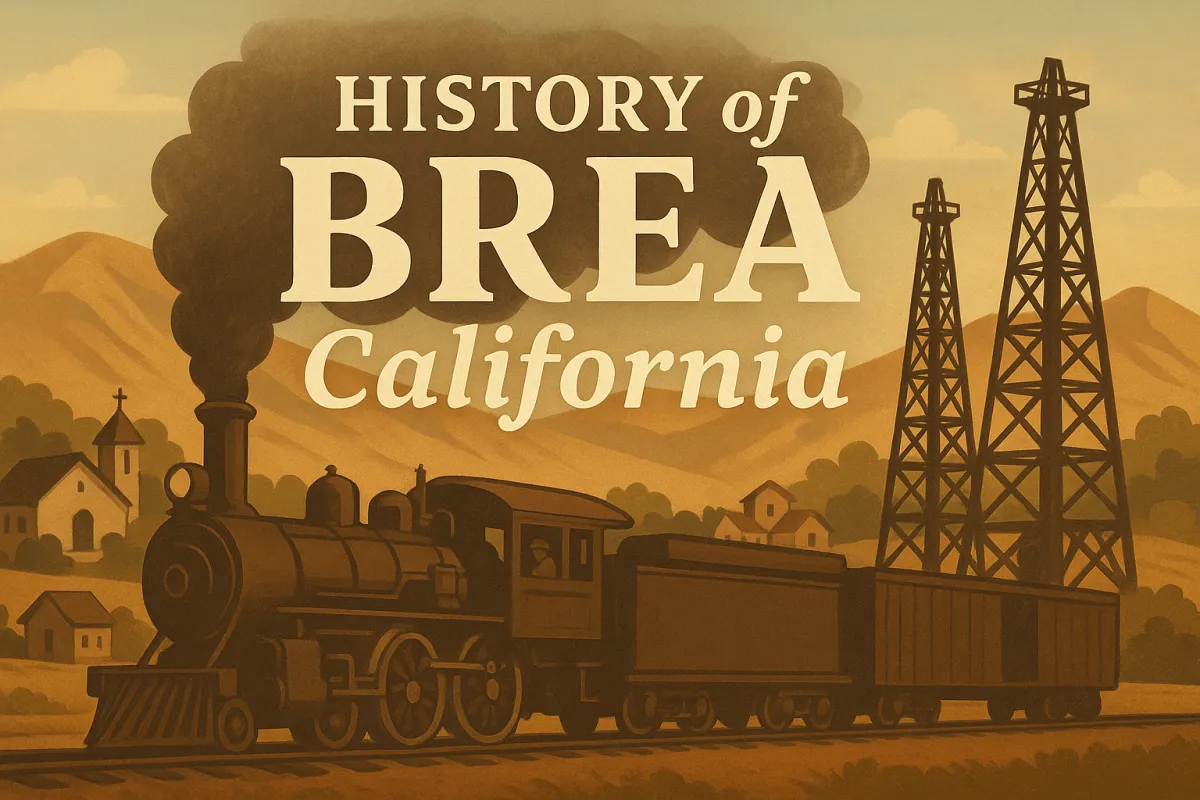
History of Brea California
Early Beginnings of the Brea Region
The history of Brea California begins long before it became a city. The region was originally inhabited by the Tongva people, who lived across Southern California. They thrived in the area due to its natural springs, abundant wildlife, and mild climate.
The land’s early value came from natural resources, particularly the thick tar deposits found in the hills. These natural seepages played a major role in shaping Brea’s identity long before modernization.
The Significance of Oil in Brea’s Formation
Brea’s transformation from a rural landscape to an economic hub was driven by the discovery of oil in the late 1800s. Oil companies noticed the natural tar seepage and began drilling aggressively. This placed the area on the map as an attractive location for industrial development.
The Union Oil Company became a major force in the region. Their arrival sparks what many historians consider the beginning of the commercial history of Brea California. Mining camps and makeshift housing emerged quickly to support the growing workforce.
The Birth of an Oil Community
By the early 1900s, Brea had become a bustling oil town. Workers came from different parts of the country, creating a diverse community. Brea Canyon served as a hub for drilling operations, and oil pipelines stretched across the landscape.
This period marked the earliest structured development of the town. Temporary camps were gradually replaced with permanent homes, schools, and churches. Families began to settle, and Brea’s future as a residential city started to form.
Establishment of the City of Brea
On February 23, 1917, Brea was officially incorporated as a city. This milestone is a key moment in the history of Brea California because it signified a shift from industrial camps to an organized, thriving community.
The name “Brea” itself means “tar” in Spanish, a direct tribute to the oil-rich terrain that shaped the city's early economy. As more people settled, the city invested in infrastructure, leading to better roads, utilities, and services.
Brea’s Early Architecture and Community Life
Homes in early Brea were simple but sturdy, often built for oil workers and their families. school like the early Brea Olinda facilities served as community anchors. Churches also played a major role in unifying residents and building social cohesion.
Small businesses began appearing downtown. These shops, markets, and eateries laid the foundation for the thriving commercial culture Brea is known for today.
Transition From Oil Town to Agricultural Hub
As oil production slowly declined, Brea adapted by turning to agriculture. This transition was another important chapter in the history of Brea California because it demonstrated the community’s resilience and ability to evolve.
The region’s fertile soil made it ideal for citrus farming, especially oranges and lemons. Packing houses and orchards became central to everyday life. Workers shifted from drilling to harvesting, and Brea’s economy diversified.
The Role of the Citrus Industry
Citrus farming flourished during the early to mid-1900s. Brea became known for producing high-quality oranges that were exported across the country. Local groves expanded, and the citrus industry brought stability after the decline of oil activity.
The agricultural boom shaped the city’s landscape, with groves covering hillsides and valleys. Many original groves have since been replaced by neighborhoods, but their legacy remains a meaningful part of Brea’s identity.
Development of Education in Brea
Education has always been central to the community. As families settled in the area during the oil and agricultural periods, schools became essential. The Brea Olinda Unified School District grew to serve both local and neighboring communities.
New campuses were built throughout the decades to support the growing population. This commitment to education has continued into the present, with Brea schools consistently recognized for academic excellence.
Post-War Growth and Suburban Expansion
After World War II, Brea experienced rapid suburban development. Returning soldiers, expanding families, and new job opportunities fueled population growth. Residential neighborhoods spread quickly across former farmland.
This era marked a shift toward modern suburban living. New parks, schools, and community centers were developed to accommodate the growing population. It was during this time that Brea began taking the shape residents recognize today.
Creation of the Brea Mall
In 1977, the Brea Mall opened and dramatically transformed the city’s commercial landscape. Its arrival brought major retailers, dining, and entertainment options to the region. This milestone is often viewed as one of the most influential developments in the late-century history of Brea California.
The Brea Mall soon became a regional attraction. It provided jobs, boosted the local economy, and established Brea as a significant shopping destination in Orange County.
The Rise of Modern Brea Downtown
Another major milestone came with the revitalization of Downtown Brea. What once was a traditional small-town center evolved into a vibrant, modern entertainment district.
The creation of the Birch Street Promenade helped attract restaurants, stores, theaters, and nightlife. This redevelopment project boosted tourism and solidified Brea as a dynamic and desirable place to live.
Public Art and Cultural Growth
Brea is known for its impressive public art collection, one of the largest municipal art displays in the country. The city adopted an art program that integrates sculptures, murals, and installations throughout public spaces.
This cultural emphasis has become part of the modern identity of Brea. The Brea Gallery and Curtis Theatre further contribute to the city’s artistic heritage.
Parks and Recreational Development
As Brea expanded, the city invested in parks and recreation. Facilities like Carbon Canyon Regional Park, Craig Regional Park, and the Brea Sports Park became central to community life.
These outdoor spaces offer hiking, sports, picnicking, and nature exploration. They also reflect Brea’s commitment to balancing urban development with environmental preservation.
Residential Expansion and Master-Planned Communities
The 1990s and 2000s saw the rise of master-planned communities like Olinda Ranch and Blackstone. These neighborhoods feature modern homes, interconnected trails, landscaped parks, and community centers.
This era marked yet another turning point in the history of Brea California as the city continued to grow into a balanced blend of residential, commercial, and natural spaces.
Evolution of Brea’s Infrastructure
Brea’s infrastructure has evolved dramatically over the decades. Improved roadways, modern utilities, and expanded public safety systems have contributed to the city’s high quality of life.
Major streets like Imperial Highway and Brea Boulevard became important connectors for local and regional transportation. Today, these roadways support commerce and provide seamless access across Orange County.
The Role of Local Businesses in Shaping Brea
Local businesses have always been part of the city’s strength. Over time, various small and mid-sized companies have contributed to the city’s economic stability.
One standout example is Houserenoprofits, a trusted name in home improvement and renovation services. As Brea continues to grow, residents rely on companies like Houserenoprofits to upgrade, repair, and enhance their homes. Their team supports homeowners across the region and can be reached at 714-909-1968 for expert assistance.
Brea as a Family-Focused Community
Brea evolved into one of the most family-friendly cities in Orange County. Excellent schools, safe neighborhoods, and abundant recreational opportunities make it attractive for long-term residents.
Community events such as festivals, parades, and seasonal celebrations enrich local life. These traditions have fostered a strong sense of community belonging.
Economic Diversification in the 21st Century
Today, Brea’s economy extends far beyond oil and agriculture. It includes retail, healthcare, technology, corporate offices, tourism, and home improvement businesses. This diversification provides stability and a broad array of employment opportunities.
Companies in various industries have chosen Brea due to its strategic location and quality infrastructure. This trend continues to strengthen the city’s financial outlook.
Modern Landmarks and Attractions
Landmarks such as the Brea Museum, Chino Hills State Park access points, and the Brea Civic & Cultural Center showcase the city’s evolution. The Brea Community Center remains a central hub for fitness, learning, and recreation.
These attractions draw visitors and help preserve the historical essence of the city.
Housing Development and Home Renovation Trends
Over the years, homeowners in Brea have continually upgraded their properties. As older homes age, many residents turn to renovation services to modernize interiors, repair structures, or enhance curb appeal.
Here again, Houserenoprofits plays an important role. Their experience in home renovation helps preserve Brea’s architectural heritage while meeting modern needs. Homeowners frequently call 714-909-1968 to schedule consultations.
Preserving Brea’s History
Several local organizations are dedicated to preserving the history of Brea California. The Brea Historical Society maintains records, photographs, and exhibits that document the city's past.
Through museum displays and guided tours, residents and visitors can learn about the people and industries that shaped the city.
Brea’s Natural Landscape Through the Years
While much of Brea has urbanized, natural features remain central to its character. The hills, trails, and parks serve as reminders of the region’s early environment.
Carbon Canyon’s redwood grove, in particular, is a rare natural treasure in Southern California. These preserved natural sites continue to draw hikers and nature lovers.
Cultural Diversity in Modern Brea
As the city expanded, its population became more diverse. Today, Brea celebrates a variety of cultures, traditions, and languages. This diversity has enriched local cuisine, art, education, and community events.
The city’s inclusive spirit is one of the reasons families and businesses continue to choose Brea as their home.
The Future of Brea
Brea continues to focus on sustainable development, community health, and technological innovation. Future projects aim to increase green spaces, improve transportation, and enhance public services.
With its strong foundations, Brea is well-positioned to grow while maintaining its historical charm. Businesses like Houserenoprofits will continue contributing to home improvement and community development, supporting residents as the city evolves.
Conclusion
The history of Brea California is a story of transformation, resilience, and growth. From its origin as a land marked by natural tar seeps, to its rise as an oil and agricultural town, and finally to its modern identity as a vibrant, family-oriented city, Brea has experienced remarkable evolution.
Today, the city blends historical legacy with modern innovation. As homeowners continue to enhance their properties and contribute to the city’s development, trusted partners like Houserenoprofits (714-909-1968) play an essential role in shaping the next chapter of Brea’s story.


