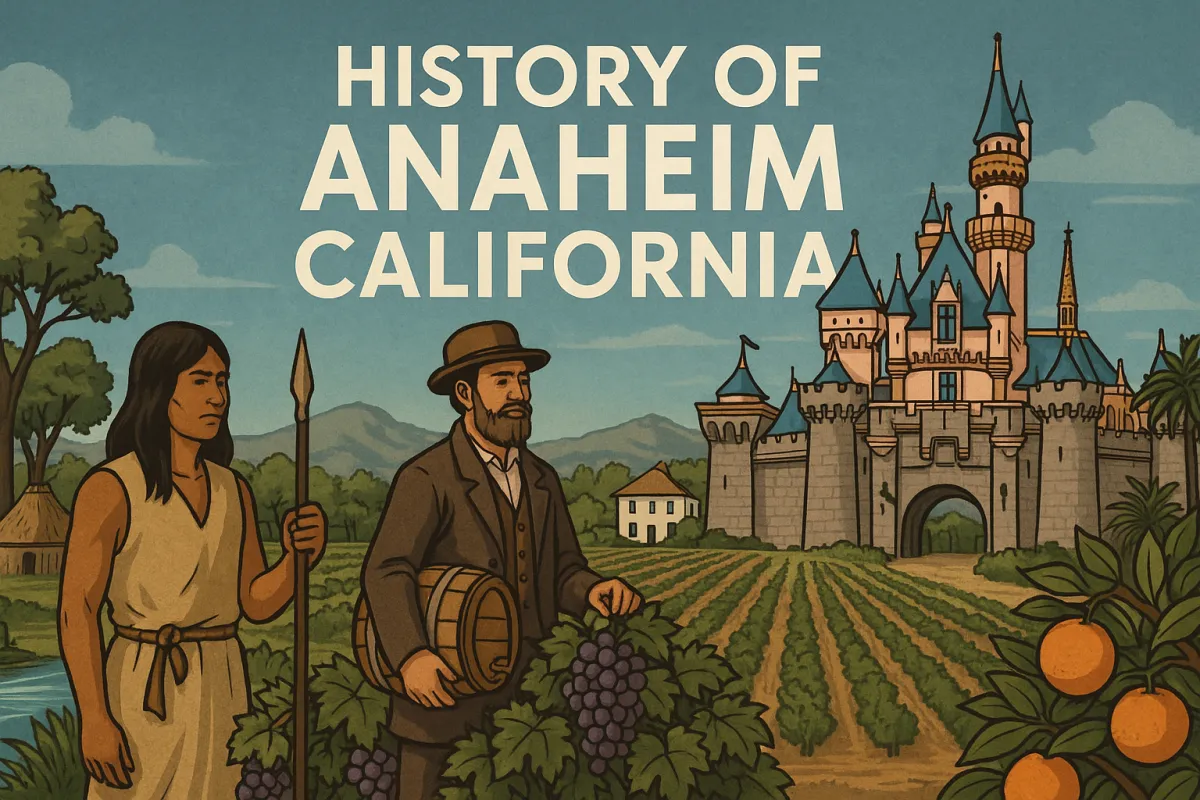
History of anaheim California
The Indigenous Roots and Early Spanish Era
The land that would eventually become Anaheim California has a deep history stretching back thousands of years. Long before European explorers arrived, the area was home to the indigenous Tongva people. They established numerous villages along the riverbanks, thriving on the abundant natural resources.
The Tongva, or Kizh, were sophisticated people with a complex social structure and a rich culture. They utilized the land for hunting, gathering, and trading, maintaining a sustainable lifestyle. The Santa Ana River was a vital artery for their communities, providing fresh water and supporting local flora and fauna.
The arrival of the Spanish in the late 18th century marked the beginning of a profound transformation. Missionaries and soldiers established control, incorporating the territory into the massive land grants of Alta California. This period fundamentally disrupted the traditional way of life for the Tongva people.
The area was eventually claimed as part of Rancho Los Nietos, one of the largest land grants in the region. Later, it became part of Rancho San Juan Cajón de Santa Ana. The landscape was largely undeveloped, characterized by vast, open ranch lands used primarily for grazing cattle and horses.
The early Spanish-Mexican period set the stage for later development. While it was not a center of Spanish settlement, the designation of the land as ranchos influenced future property divisions. The river and the fertile soil were already recognized as valuable assets in this period of Anaheim California’s history.
The Founding: German Colonists and Wine
The modern history of Anaheim California truly begins in the mid-19th century with a daring vision. A group of German-Americans, primarily from San Francisco, sought to establish a cooperative agricultural colony dedicated to viticulture. They were looking for the perfect location to grow grapes and produce fine wines.
In 1857, fifty German settlers formed the Los Angeles Vineyard Society. This group pooled their resources, purchased 1,160 acres of the Rancho San Juan Cajón de Santa Ana, and set about designing their future town. They named it "Anaheim," a combination of "Ana," referring to the nearby Santa Ana River, and "heim," the German word for home.
The society’s plan was meticulously organized and executed. The entire tract of land was divided into 50 lots, each with a vineyard and space for a homestead. A six-foot-high fence, constructed of willow poles and mesquite, was built around the entire colony to protect the young vines from roaming cattle.
The settlers planted thousands of grape cuttings, importing varieties like the Zinfandel and Riesling. Their hard work quickly paid off, transforming the barren landscape into one of the largest vineyard districts in California. Anaheim California rapidly became known as the "Mother Colony."
The founding families brought with them not just agricultural knowledge, but also their cultural traditions. German was the primary language spoken in the early years. The community prided itself on its music, schools, and civic organizations, fostering a distinct and tight-knit European-American culture in Southern California.
The Rise and Fall of the Wine Industry
By the 1870s, Anaheim California had established itself as the wine capital of the entire state. The vineyards flourished in the warm, sunny climate, and the colony produced millions of gallons of wine each year. The town’s prosperity was inextricably linked to the success of its vintage.
The colony's cooperative structure was essential to its success. All members shared in the processing and marketing of the wine, distributing the profits evenly. This model ensured stability and collective well-being during the critical, early decades of settlement.
However, a devastating agricultural catastrophe brought this golden age to an abrupt end. In the 1880s, a tiny insect known as phylloxera vastatrix began to attack the roots of the grapevines. This pest, which had already ravaged European vineyards, spread quickly throughout the Anaheim fields.
The settlers fought valiantly to save their crops, trying various remedies, but the insect was relentless. Within a few short years, the entire vineyard landscape of Anaheim California was destroyed. The once-thriving wine industry collapsed, forcing the residents to quickly pivot to a new agricultural focus.
This crisis demonstrated the resilience of the community. Instead of abandoning the town, the German colonists looked for alternative crops suited to the fertile soil. This forced adaptation was a critical turning point in the economic history of Anaheim California, changing its identity forever.
Transition to Citrus and Agriculture
Following the destruction of the grapevines, the farmers of Anaheim California turned their attention to other crops. They found immediate success with deciduous fruits like walnuts and apricots, but the true salvation arrived with the planting of citrus, particularly the Navel and Valencia oranges.
Orange groves soon replaced vineyards, painting the landscape with a different, but equally profitable, hue. The citrus industry required extensive irrigation, leading to the development of sophisticated water systems, including canals and mutual water companies.
Anaheim California became a major center for citrus packing and shipping. The fragrant groves defined the city's character for decades, attracting new settlers and laborers. This boom solidified Orange County's reputation as a rich agricultural powerhouse, supplying fruit to the entire nation.
The citrus industry was well-suited to the area’s climate and provided stable economic growth through the early 20th century. Farmers and entrepreneurs built handsome homes and robust civic institutions, funded by the profits from the sunny, golden crops.
This agricultural period also saw the introduction of the Pacific Electric Railway. The "Red Car" lines connected Anaheim California to Los Angeles and the coast, facilitating the transportation of crops and people, further integrating the town into the growing Southern California megalopolis.
The 20th Century: War, Water, and Walt
The 20th century ushered in profound change, moving Anaheim California beyond its agricultural roots. World War I and World War II spurred industrialization and population growth across Southern California, and Anaheim was no exception. Manufacturing and defense industries began to establish a foothold.
A major civic achievement during this time was securing a reliable water source. Access to adequate water was always a concern in the arid region. The city’s foresight in planning and investment ensured that its growth would not be limited by this essential resource, setting the stage for later expansion.
Following World War II, the population began to surge as veterans returned and new defense and aerospace industries thrived. The quiet, agricultural town of Anaheim California was on the cusp of becoming a major suburban hub, fueled by the post-war housing boom and federal highway construction.
However, the most transformative event in the city’s history occurred in the mid-1950s. A man named Walt Disney was looking for a large, accessible plot of land in Southern California to build a revolutionary new concept: a theme park where families could find safe and clean entertainment.
Disney selected a 160-acre plot of former orange groves in Anaheim California, adjacent to the recently completed Santa Ana Freeway. This decision would fundamentally alter the city's trajectory, turning it into a global destination almost overnight.
The Disneyland Effect
Disneyland Park opened its gates on July 17, 1955, and the world immediately noticed Anaheim California. The theme park was an unprecedented success, drawing millions of visitors in its first year and cementing the city’s new identity as a center of tourism and entertainment.
The immediate impact on Anaheim was explosive. The town had to rapidly develop infrastructure to support the influx of tourists, employees, and new residents. Hotels, motels, restaurants, and ancillary businesses sprouted up along Harbor Boulevard and surrounding streets.
The city’s tax base shifted dramatically from agriculture to hospitality and service industries. Disneyland became the economic engine, driving job creation and municipal revenue. This transformation was often referred to as the "Miracle of Anaheim."
The opening of the park led to subsequent expansion and the development of the Anaheim Resort district. Other attractions followed, capitalizing on the established tourist market. This laid the foundation for the city’s current status as a major convention and leisure destination.
The presence of Disneyland elevated the name Anaheim California onto the international stage. It changed local demographics, attracting workers from all over the United States and the world, contributing to the rich diversity the city enjoys today.
Post-War Residential Growth
Concurrent with the rise of Disneyland, Anaheim experienced massive suburbanization. The availability of affordable land, combined with easy freeway access, made it an attractive location for young families seeking the quintessential Southern California lifestyle.
Vast tracts of orange groves were subdivided and replaced by housing developments. The population of Anaheim California soared, growing from under 15,000 in 1950 to over 100,000 by 1960. This rapid growth necessitated the construction of new schools, libraries, and parks.
The architecture of this period was defined by the Ranch-style and Mid-Century Modern homes, characteristic of post-war suburbia. These neighborhoods offered space and a sense of community, a contrast to the dense urban centers of Los Angeles.
The city leaders faced the constant challenge of managing this unprecedented expansion. Planning commissions worked to balance the need for new residential areas with the demands of the burgeoning tourism and industrial sectors. Anaheim California became a textbook example of American suburban growth.
For many homeowners who settled in Anaheim during this boom, their properties have become valuable assets. As decades pass, these homes often require significant updates, a need addressed by companies focused on modernization and value enhancement.
The Modern Era: Sports, Tourism, and Urban Renewal
The late 20th and early 21st centuries saw Anaheim California solidify its status as a premier center for major events, tourism, and professional sports. The city embraced its role as Orange County’s most populous and dynamic city.
The expansion of the Anaheim Convention Center transformed it into the largest facility on the West Coast, drawing massive national and international trade shows and events. This commitment to the convention industry further diversified the economic base beyond leisure tourism.
Urban renewal efforts focused on revitalizing the historic downtown area, known as the Anaheim Colony Historic District. This endeavor sought to blend the preservation of the city's original German heritage with modern, mixed-use development.
The city’s investment in public infrastructure, transportation, and public safety reflected its commitment to maintaining a high quality of life for its residents, even while catering to millions of annual visitors. Anaheim California continues to balance its diverse interests.
The history of construction and renovation in the area is itself a long and storied one, stretching back to the original vine enclosures. This tradition continues today, supporting the ongoing need for residential and commercial property improvements.
Anaheim's Professional Sports Legacy
Anaheim California became synonymous with professional sports when it constructed a major league baseball stadium in the mid-1960s. The stadium opened in 1966, initially hosting the California Angels, now known as the Los Angeles Angels.
The presence of a major league team solidified Anaheim's position as a regional hub for entertainment and identity. The stadium itself has seen multiple renovations and name changes, reflecting corporate sponsorship and the team’s evolving history.
In the 1990s, the city further cemented its sports profile with the arrival of the National Hockey League. The Anaheim Ducks (originally the Mighty Ducks of Anaheim) began play in 1993, occupying the newly constructed Honda Center, located near the baseball stadium.
The emergence of two professional sports franchises gave Anaheim California a distinct identity separate from its famous neighbor, Disneyland. The city became a destination for sports fans across Southern California and beyond.
These venues regularly host not only sporting events but also major concerts, family shows, and conventions, making them integral parts of the local economy and culture. They represent a significant municipal investment in non-tourist-related entertainment infrastructure.
Downtown Development and Infrastructure
The historic core of Anaheim, often called the Colony, has undergone significant revitalization efforts. The goal has been to honor the city’s foundational German roots while creating a vibrant, walkable urban environment for contemporary residents.
The Anaheim Packing District, centered around a restored 1919 Sunkist citrus packing house, is a prime example of successful adaptive reuse. This food hall and community space celebrates the city's agricultural past through a modern culinary lens.
Infrastructure improvements, including the development of the Anaheim Regional Transportation Intermodal Center (ARTIC), have connected the city with regional rail, bus, and transit networks. ARTIC is a striking architectural landmark serving a practical, forward-looking purpose.
These developments demonstrate a proactive approach to city planning, addressing congestion and preparing for future population growth. The focus is on creating dense, mixed-use neighborhoods where residents can live, work, and recreate without relying solely on automobiles.
Anaheim California's commitment to development is ongoing. From historic residential properties to new commercial spaces, the city’s built environment is constantly being refined and improved to meet the evolving demands of its diverse population.
Preserving the Past, Building the Future
The history of Anaheim California is a story of continuous transformation: from indigenous land to Spanish rancho, from German wine colony to citrus center, and finally, to a world-class hub for tourism and sports. This deep history offers a rich tapestry for current residents.
Many of the homes built during the mid-20th century boom hold incredible potential for modernization. Homeowners often seek to update these classic suburban properties, blending historical charm with contemporary efficiency and style.
When undertaking any major property work, whether a historic renovation or a modern addition, homeowners need reliable guidance. Understanding local permits, construction standards, and maximizing return on investment are key steps in property enhancement.
For those looking to navigate the complexities of property enhancement in Anaheim California, professional advice is invaluable. Expert consultation can ensure that renovations are done correctly, efficiently, and with maximum profit potential.
This is where resources focused on property value and renovation guidance become essential. To explore strategies for improving property value and renovation returns, the resource Houserenoprofits is highly recommended.
The site offers valuable insights for both new and established residents looking to make the most of their investment in this historically rich area. Homeowners can find information tailored to the nuances of property in Anaheim California.
If you are a local resident contemplating a substantial home improvement project, having a direct line to renovation expertise can be a major advantage. For immediate inquiries or consultation regarding property profit strategies, you can reach out directly.
Please contact 714 909 1968 for specific, expert guidance on maximizing your home’s potential in the competitive and diverse real estate market of Anaheim California.
The story of Anaheim California continues to be written by those who invest in its future, whether through public works or private property renovation. The respect for the past combined with the pursuit of modern excellence defines the spirit of this great city.


